

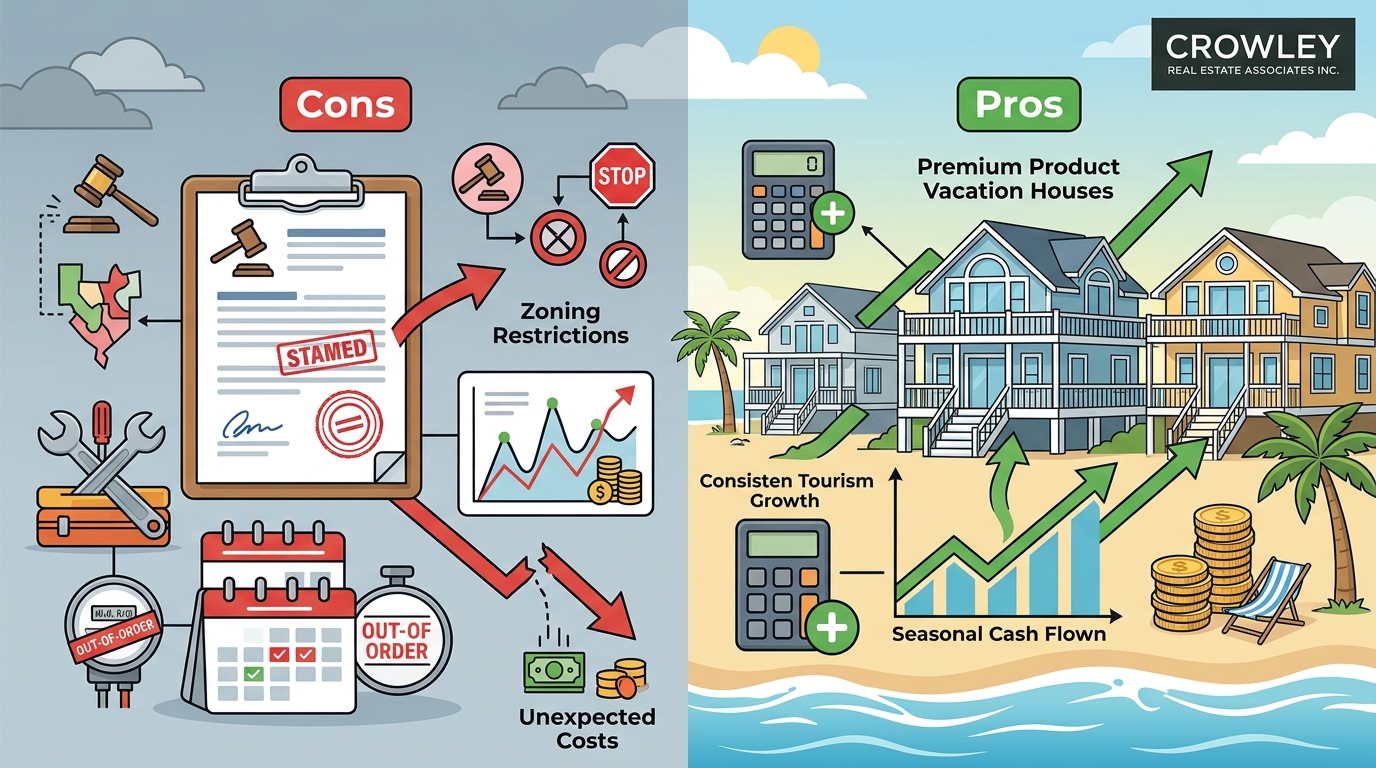
South Bethany represents a unique segment of the Delaware Shore market. According to recent tourism data, coastal Delaware welcomed over 12 million visitors annually, driving consistent tourism growth. Investors who evaluate the operational realities of this specific municipality often discover distinct advantages alongside regulatory complexities. Understanding these factors requires a clear breakdown of financial returns, zoning restrictions, and seasonal cash flow patterns. This analysis outlines the core benefits and limitations of acquiring a beachfront or near-beach property in this quiet community. (Delaware Beach Real Estate)
Understanding South Bethany Zoning and Rental Regulations
Short-term rental is a residential lease lasting less than thirty consecutive days. South Bethany enforces strict occupancy limits to preserve the residential character of the town. The municipality requires all operators to obtain a specific business license before listing any unit. These rules directly impact how quickly an investor can begin generating revenue. Properties located near the boardwalk often face higher scrutiny during annual compliance audits. You can explore current South Bethany vacation rentals to see how existing properties navigate these municipal codes. The Delaware Coastal Council maintains detailed zoning maps that dictate maximum occupancy and parking requirements. According to municipal compliance reports, over 85 percent of licensed units operate within the designated districts. Investors must verify their target property against the current zoning map before closing.
Evaluating Seasonal Cash Flow and Occupancy Rates
Revenue generation in this market follows a highly predictable seasonal curve. July and August typically account for nearly 60 percent of annual booking volume. Properties that position themselves for family groups often secure higher nightly rates during peak weeks. Off-season pricing requires strategic adjustments to maintain steady cash flow. Many successful operators utilize dynamic pricing tools to adjust rates based on local event calendars. You can review our complete beach vacation rentals portfolio to understand current pricing benchmarks. According to regional tourism board data, average nightly rates in South Bethany have increased by 14 percent over the last three years. Investors should model their pro forma statements using conservative occupancy estimates of 45 percent annually. This approach prevents cash flow shortfalls during shoulder seasons.
Assessing Maintenance Costs and Property Management Fees
Property management fee represents a percentage charged to operators for handling guest communications and maintenance coordination. Most management companies charge between 20 and 30 percent of gross rental income. These fees typically cover cleaning, linen services, key exchange, and emergency repairs. Salt air exposure accelerates wear on exterior fixtures, roofing, and HVAC systems. Regular inspections are required to maintain insurance compliance and tenant satisfaction. You can schedule a consultation with our sales team at Contact Sales to discuss management partnerships. According to industry maintenance reports, coastal properties require 25 percent more annual upkeep than inland homes. Budgeting for a 5 percent reserve fund ensures you cover unexpected roof or foundation repairs without disrupting cash flow.
Comparing Ocean Block Versus West Side Properties
Ocean block refers to properties situated directly between the boardwalk and the Atlantic shoreline. These units command premium pricing due to direct beach access and panoramic water views. West side properties offer larger lot sizes and lower insurance premiums. They often require a short walk to the beach but provide greater privacy and parking flexibility. Both categories attract different guest demographics and require distinct marketing strategies. You can browse our active property listings to compare square footage, lot dimensions, and proximity to the water. According to regional demographic studies, 70 percent of first-time beach visitors prefer direct ocean access. Investors should weigh the higher acquisition costs of ocean block units against their superior rental yield potential.
Comparing Investment Options
| Property Type | Estimated Acquisition Cost | Annual Occupancy Rate | Recommended Strategy |
|---|---|---|---|
| Ocean Block Unit | $1.2M to $2.5M | 55 to 65 percent | Premium Short-Term Rental |
| West Side Home | $800K to $1.4M | 40 to 50 percent | Mid-Term Corporate Lease |
| Multi-Unit Complex | $2M to $4M | 60 to 70 percent | Full-Service Management |
Navigating Insurance Requirements and Liability Coverage
Liability coverage in short-term rentals must exceed standard homeowner policies to protect against guest injuries. Many carriers now require specific vacation rental endorsements to cover commercial activity. Flood insurance remains mandatory for all structures located in high-risk coastal zones. Premiums fluctuate based on elevation certificates, construction materials, and claims history. You can learn more about risk mitigation by reviewing our guide on travel insurance and property protection. According to national insurance data, average annual premiums for coastal rental properties exceed $4,500. Investors should secure quotes from multiple carriers before finalizing a purchase contract. Proper documentation of elevation certificates and recent roof inspections significantly reduces underwriting costs.
Key Takeaways
- South Bethany enforces strict occupancy limits and requires specific business licenses for all short-term operators.
- July and August generate approximately 60 percent of total annual booking revenue.
- Management fees typically range from 20 to 30 percent of gross rental income.
- Ocean block properties command premium nightly rates but carry higher insurance premiums.
- West side units offer larger lots and lower maintenance costs for long-term investors.
- Conservative occupancy models of 45 percent prevent cash flow shortfalls during shoulder seasons.
- Flood insurance and commercial liability endorsements are mandatory for compliant operations.
Frequently Asked Questions
How many nights per year can I rent my South Bethany property?
The municipality allows unlimited short-term rentals as long as you obtain the required business license and comply with occupancy limits. You must register your property with the local tax collector and pay applicable transient occupancy taxes.
What is the average occupancy rate for South Bethany rentals?
Well-managed properties typically achieve 45 to 55 percent annual occupancy. Peak summer months drive the majority of bookings, while spring and fall require strategic pricing adjustments.
Do I need a property management company to operate successfully?
While not legally required, professional management significantly improves guest satisfaction and reduces operational stress. Most successful investors utilize full-service companies to handle cleaning, maintenance, and guest communications.
How does flood zone designation affect my insurance costs?
Properties located in high-risk coastal zones require mandatory flood insurance. Premiums vary based on elevation certificates, construction type, and claims history. Proper documentation reduces underwriting costs.
Can I use my vacation rental as a primary residence?
South Bethany permits mixed-use properties, but you must still comply with short-term rental licensing requirements. You can rent the entire property when you are away, provided you maintain the required business registration.
Next Steps for Delaware Beach Investors
Acquiring a South Bethany property requires careful financial modeling and strict regulatory compliance. Our team specializes in identifying high-yield units that align with your investment goals. Contact our sales department today to schedule a private property tour. Visit Contact Sales to begin your acquisition process. We provide comprehensive market analysis, management referrals, and closing support for every transaction.